
Habit counseling and intervention in Chennai plays a vital role in supporting healthy oral and overall development in children and teenagers. Certain behaviors — thumb-sucking, mouth breathing, tongue thrusting, or prolonged pacifier use — can affect dental and facial growth if left unaddressed. Research shows that untreated oral habits can lead to misaligned teeth, speech difficulties, and even breathing problems over time.
At Kidz N Teenz Dental Clinic, our approach to oral habit intervention for kids focuses on early, gentle correction — helping children move past these habits without stress or discomfort. Our team works closely with parents to identify the root cause of each habit and build a treatment plan suited to the child’s age and comfort level, setting the foundation for lifelong oral health and confidence.
Does Your Child Need Habit Counseling?
Consider booking a consultation if your child shows any of the following:
- Still thumb-sucking or using a pacifier past age 4
- Breathes through their mouth most of the time, even when not sick
- Snores or seems to sleep restlessly
- Pushes their tongue against their front teeth when swallowing or talking
- Has noticeably crooked or protruding front teeth
- Bites nails to the point of bleeding, infection, or visibly short nails
- Has speech sounds that seem unclear or delayed for their age
- Complains of dry mouth or bad breath frequently
When to Seek Habit Counseling — Age Guide
| Habit | Normal up to | Consider counseling if it continues past |
| Thumb-sucking / pacifier use | Age 2–3 | Age 4 |
| Mouth breathing | — (never “normal” long-term) | Any persistent pattern lasting 2+ weeks |
| Tongue thrusting | Age 3–4 (common in toddlers) | Age 5–6, or if speech is affected |
| Nail biting | Occasional, situational | Daily/compulsive biting past age 6, or if skin/nail damage occurs |
Thumb-Sucking & Pacifier Weaning
Thumb-sucking and pacifier use are natural reflexes in infants, offering comfort and security. But when these habits continue past age three or four, they can lead to dental misalignment, bite issues, and speech difficulties — which is where structured thumb-sucking treatment for children becomes important.
Effects of Prolonged Thumb-Sucking and Pacifier Use:
- Misalignment of the front teeth, leading to open bites or overbites.
- Changes in palate shape, which may affect speech development.
- Increased risk of speech impediments, jaw misalignment, and breathing difficulties.
Our thumb-sucking treatment for children uses gentle, positive reinforcement rather than punishment — reward systems, habit-breaking appliances where needed, and clear parental guidance to make weaning a smooth process. We also encourage healthier self-soothing alternatives, like comfort toys or distraction techniques, so children replace the habit rather than simply losing a coping tool.
Mouth Breathing Correction
Mouth breathing, often triggered by allergies, nasal congestion, or structural airway issues, can cause serious oral and overall health concerns in children and teenagers. Left unmanaged, it may lead to poor oxygen intake, abnormal facial growth, and dental misalignment.
Signs Your Child May Need Mouth Breathing Correction:
- Chronic dry mouth and frequent bad breath.
- A narrow facial structure or a habitual open-mouth resting posture.
- Increased risk of misaligned teeth, speech issues, and poor sleep quality.
Effective mouth breathing correction in kids starts with diagnosing the underlying cause — whether that’s allergies, nasal obstruction, or jaw alignment. From there, treatment may include nasal breathing exercises, orthodontic support, myofunctional therapy, or habit-breaking devices. Correcting this early supports better sleep, facial development, and overall confidence.
Tongue Thrusting Habit
Tongue thrusting happens when the tongue pushes against the teeth during swallowing or speech. Left unaddressed, it can interfere with dental alignment, speech clarity, and orthodontic treatment outcomes — making early tongue thrusting habit correction an important part of a child’s development.
- Persistent tongue thrusting can cause open bites and speech articulation issues, making certain sounds harder to pronounce correctly.
- Myofunctional therapy retrains tongue positioning and swallowing patterns, reinforcing correct muscle function over time.
- Parental involvement — supervised exercises and gentle reminders — significantly improves the success rate of correction.
Our approach to tongue thrusting habit correction combines guided tongue exercises, habit-awareness training, and orthodontic appliances in more complex cases. Speech therapy is brought in when pronunciation is affected. Identifying the root cause early leads to faster, more lasting results.
Nail Biting Habit
Nail biting is a common, often stress-related habit that can lead to dental damage, infections, and self-esteem issues in children and teenagers. Because it’s frequently unconscious, structured support is often the most effective path to breaking it.
- Nail biting habit in children raises the risk of oral infections, since bacteria transfers easily from hands to mouth.
- Behavioral therapy techniques — including habit reversal training and mindfulness exercises — are highly effective for breaking the cycle.
- Stress management and alternative coping tools, like fidget aids and relaxation techniques, help reduce the urge to bite.
Treating a nail biting habit in children involves awareness-building, positive reinforcement, and substitute habits that give kids something else to do with their hands. Identifying and managing the underlying stress trigger is often what makes the difference between temporary and lasting change.
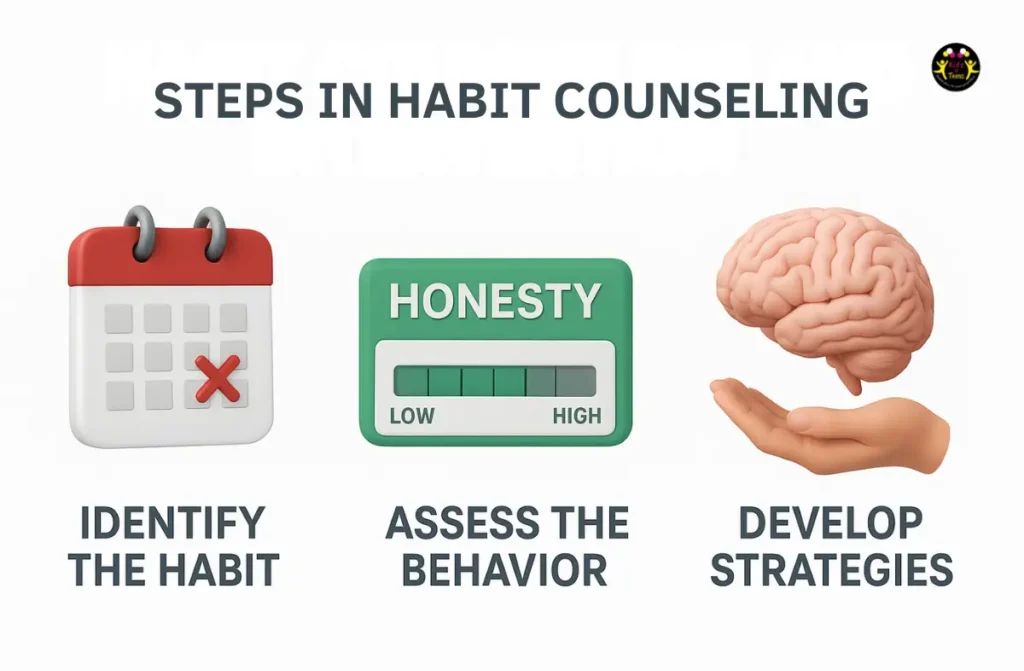
What to Expect: Your Habit Counseling Journey
- Step 1 — Initial Consultation (30–45 minutes) We assess the habit, its severity, and any early signs of dental or facial impact through a gentle, child-friendly exam. Parents are involved throughout — there are no surprises and no pressure.
- Step 2 — Personalized Habit Plan Based on the child’s age, habit type, and comfort level, we recommend an approach — behavioral reinforcement, a habit-breaking appliance, myofunctional therapy, or a combination.
- Step 3 — Active Intervention This may involve in-clinic appliance fitting, take-home exercises, or scheduled follow-up coaching sessions. Most habit programs run [few weeks/months], with progress reviewed at each visit.
- Step 4 — Follow-Up & Maintenance Once the habit is broken, we monitor for a set period to confirm the change has stuck and address any residual dental effects (e.g., minor orthodontic correction if needed).
Why Parents Choose Us for Habit Correction
- Child-first approach. Every technique we use — from reward systems to appliance design — is chosen based on what actually works for a child’s age and temperament, not a one-size-fits-all protocol.
- No punishment-based methods. We never use fear, shame, or discomfort to break a habit. Positive reinforcement and gradual behavior change get better, longer-lasting results.
- Parents are part of the plan. You’ll leave every visit with clear, practical steps to reinforce progress at home — habit correction works best as a team effort between clinic and family.
- Integrated care. When a habit affects speech or breathing, we coordinate directly with speech therapists and ENT specialists where needed, rather than treating the dental symptom in isolation.
- Two convenient Chennai locations. Anna Nagar and Pallikaranai, so follow-up visits stay easy to fit into your routine.
Myths vs. Facts About Oral Habits in Children
- Myth: “My child will just stop thumb-sucking on their own — no need to worry.” Fact: Most children do stop naturally by age 3–4. But if the habit continues past that window, it rarely resolves on its own and often needs gentle intervention to prevent lasting dental effects.
- Myth: “Mouth breathing is just a phase, especially during allergy season.” Fact: Occasional mouth breathing during a cold is normal. But if it becomes the child’s default breathing pattern, it can affect facial growth and sleep quality — it’s worth having assessed rather than waiting it out.
- Myth: “Nail biting is just a bad habit, not a dental issue.” Fact: Chronic nail biting can chip teeth, damage the gum line, and introduce bacteria into the mouth — it’s both a behavioral and an oral health concern.
- Myth: “Habit-breaking appliances are painful or scary for kids.” Fact: Modern habit-correction appliances are designed specifically for comfort and are introduced gradually, often alongside positive reinforcement so children don’t experience them as a punishment.
- Myth: “Tongue thrusting is only a speech problem, not a dental one.” Fact: Tongue thrusting frequently affects both — it can shift teeth into an open bite over time while also affecting speech clarity, which is why we treat both together.
Conclusion
Habit counseling and intervention in Chennai gives children and teenagers the early support they need for healthy, confident oral development. Whether it’s thumb-sucking treatment for children, mouth breathing correction in kids, tongue thrusting habit correction, or managing a nail biting habit in children, timely guidance helps prevent complications before they affect long-term dental health.
At Kidz N Teenz Dental Clinic, our goal is to make oral habit intervention for kids a positive, low-stress experience for both children and parents — building healthy habits that last well beyond childhood.
Read also Dental Trauma.


