
Reviewed By
Consultant Pediatric Dentist and MDS in Pediatric Dentistry, with over 10 years of experience at Kidz N Teenz Dental Clinic. Dr. Aysha Mansoor specializes in interceptive orthodontics, conscious sedation, and care for children with special needs.
The way a child feels about the dentist often starts with the very first visit. A calm, friendly experience can help a child grow up seeing dental care as a normal part of life. A frightening one can lead to years of fear and missed checkups.
This guide explains what a pediatric dentist in India does, how they are trained and why early dental care matters. It also introduces the dental team at Kidz N Teenz Dental Clinic in Chennai and answers common questions parents ask about their child’s first and later dental visits.
Why Pediatric Dental Care Matters
Children’s teeth do much more than fill out a smile. Problems that start in early childhood can affect a child’s health, comfort and confidence for years.
- Milk teeth guide the permanent teeth: Baby teeth help children chew, speak clearly and hold the space for permanent teeth. When decay causes a milk tooth to be lost too early, nearby teeth can drift and block the permanent tooth from coming in straight.
- Tooth decay can spread: Cavities in milk teeth can grow quickly because the enamel is thin. Untreated decay can lead to pain, infection and swelling that affect sleep, eating and school.
- Small problems are easier to fix: Early visits help the dentist find a shifting bite or an early cavity before it needs bigger treatment.
- Good habits start young: A pediatric dentist in India also teaches parents and children about brushing, flossing and food choices, so healthy habits take root long before the teenage years.
How Pediatric Dentists Are Trained in India
In India, a pediatric dentist first completes the five year Bachelor of Dental Surgery (BDS) course, which includes one year of internship. After clearing the NEET MDS exam, the dentist studies for three more years. This leads to a Master of Dental Surgery (MDS) in Pediatric and Preventive Dentistry, a specialty also called pedodontics.
The MDS course covers how children’s teeth and jaws grow, child psychology, behaviour management and sedation. It also covers dental care for children with special needs and early orthodontic treatment. Many pediatric dentists in India are members of the Indian Society of Pedodontics and Preventive Dentistry (ISPPD), the national professional body for this specialty.
Because of this training, a pediatric dentist in India knows how to talk to a nervous toddler, a curious school child or a busy teenager in a way each one understands.

Meet the Kidz N Teenz Dental Team
Kidz N Teenz Dental Clinic is a dental clinic for children and teenagers in Chennai, with branches in Anna Nagar and Pallikaranai. The team includes pediatric dentists and specialists from other branches of dentistry who work together when a child needs more than one kind of care.
Dr. Roshan Rayen
- Qualification: BDS, MDS (Pediatric Dentistry), FICCDE (USA)
- Experience: 23+ years
- Designation: Pediatric Dentist
Dr. Roshan Rayen is a pediatric dentist with more than 23 years of experience. A large part of his work focuses on sleep dentistry. This area looks at how the teeth, jaws and airway affect breathing during sleep. Children with snoring or disturbed breathing at night may benefit from this kind of assessment.
His other areas of interest include sedation assisted dentistry for anxious children and the management of TMJ problems. The TMJ is the jaw joint just in front of the ear. He works with ENT surgeons, pediatricians and physiotherapists when a child’s dental problem is linked to breathing, sleep or jaw function.
His clinical services include interceptive orthodontics, fluoride therapy and tooth extractions under local anaesthesia. He uses nitrous oxide (laughing gas) sedation for children who feel very anxious. He is also an adjunct professor at Sri Ramachandra Institute in Chennai, where he teaches dental students.
Dr. V.S. Hariharan
- Qualification: BDS, MDS (Pediatric Dentistry), FICCDE (USA)
- Experience: 25+ years
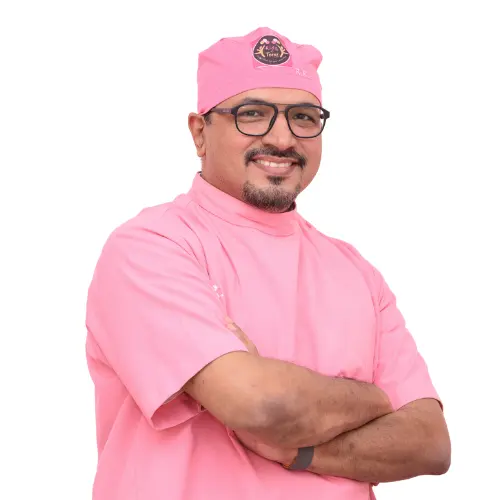
- Designation: Chief Pediatric Dentist and Managing Director
Dr. V.S. Hariharan is the Chief Pediatric Dentist and Managing Director of Kidz N Teenz Dental Clinic. He has trained in dental trauma management, orthodontics, facial orthopaedics and TMJ management. Facial orthopaedics means guiding the growth of the jaws in children so that the face and bite develop in balance.
A key part of his work is dental care for children with special healthcare needs and for children with strong dental fear. He uses behaviour management methods suited to the child’s age, along with sedation when needed, so that treatment can be done comfortably.
His clinical work covers preventive care and restorative treatment for young patients. It also includes the care of teeth injured in falls and sports accidents. He has also been involved in school dental awareness programmes and outreach work that brings basic dental care to communities with limited access.
Dr. Aysha Mansoor
- Qualification: BDS, MDS (Pediatric Dentistry)
- Experience: 10+ years
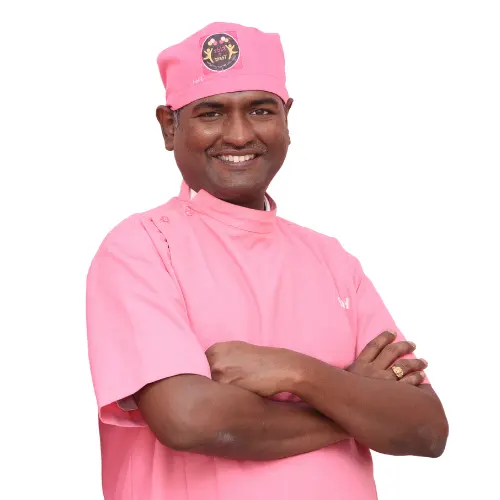
- Designation: Consultant Pediatric Dentist
Dr. Aysha Mansoor is a consultant pediatric dentist with more than 10 years of experience. She uses conscious sedation with nitrous oxide to help anxious children stay calm during treatment. The child stays awake but feels more relaxed.
Her clinical work includes interceptive orthodontics, which means correcting bite and spacing problems early while the jaw is still growing. She also has experience in full mouth rehabilitation under general anaesthesia. This option is used for children who need many teeth treated and cannot manage long sessions in the dental chair, including some children with special needs.
She makes habit breaking appliances for children who suck their thumb or push their tongue against the teeth while swallowing. These habits can change the shape of the teeth and jaw over time. Her work also covers preventive and restorative care, and she focuses on orthodontics and esthetic corrections.
Dr. Chandrakantha Balaraman
- Qualification: BDS, MDS (Pediatric Dentistry)
- Experience: 5+ years
- Designation: Associate Pediatric Dentist
Dr. Chandrakantha Balaraman is an associate pediatric dentist. Her areas of focus include the management of dental trauma and endodontic treatment of young permanent teeth. Young permanent teeth have roots that are still growing. They need special care after decay or injury to help the root finish forming.
She is trained in advanced behaviour management, including treatment under sedation and general anaesthesia. Her clinical services include early cavity care, space maintainers and habit correction appliances. A space maintainer is a small device that holds the gap when a milk tooth is lost early, so the permanent tooth has room to come in.
She gives importance to prevention, parent counselling and checking each child’s risk of tooth decay. She has published research in PubMed indexed journals and has received national awards for her research work.

Dr. Nida Fathima
- Qualification: BDS
- Experience: 7+ years
- Designation: Dental Surgeon (General Dentistry)
Dr. Nida Fathima is a dental surgeon in general dentistry at Kidz N Teenz Dental Clinic. She works alongside the pediatric dentists in the day to day care of young patients.
Her clinical work includes the management of early childhood caries. This is tooth decay that starts in babies and toddlers, often linked to night time bottle feeding or frequent sugary snacks. She also helps fit habit breaking appliances for thumb sucking and tongue thrusting.
She uses minimally invasive methods where possible, which means removing as little of the natural tooth as needed. She places strong value on early care and on teaching parents simple steps to protect their child’s teeth at home.

Dr. Bhavithra Augusthian
- Qualification: BDS, MDS (Oral Medicine and Radiology)
- Experience: 7+ years
- Designation: Oral and Maxillofacial Radiologist
Dr. Bhavithra Augusthian is an oral physician and maxillofacial radiologist. Oral medicine and radiology is the branch of dentistry that diagnoses diseases of the mouth, jaws and face. It also involves reading dental X-rays and scans.
She uses modern imaging methods, such as digital X-rays, to help find problems that cannot be seen during a normal examination. Examples include hidden decay between teeth, missing or extra teeth, cysts in the jaw and teeth that are not coming in the right way.
Her role supports the pediatric team in making an accurate diagnosis before treatment is planned. She also explains findings to parents in simple words so they understand what the images show and why a treatment is suggested.

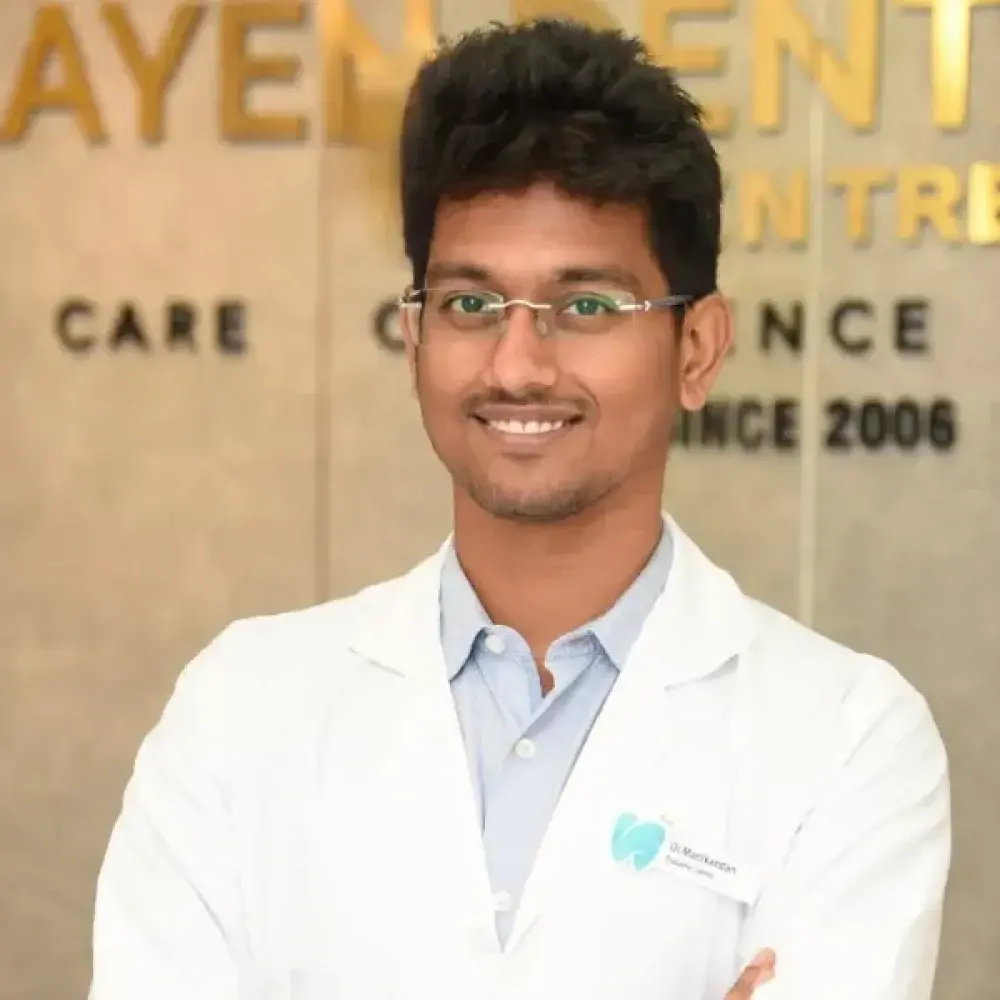
Dr. D. Manikandan
- Qualification: BDS, MDS (Pediatric Dentistry)
- Experience: 7+ years
- Designation: Associate Pediatric Dentist
Dr. D. Manikandan is an associate pediatric dentist. He completed his MDS in Pediatric Dentistry at HP Government Dental College and Hospital, Shimla.
His clinical experience includes full mouth rehabilitation, interceptive orthodontics and sedation techniques for children. He also has experience in PNAM therapy for babies born with a cleft lip and palate. PNAM (presurgical nasoalveolar moulding) uses a small plate to gently shape the gums, lip and nose before the baby’s cleft surgery.
He has trained in nitrous oxide sedation, aesthetic dentistry and space maintainers. He has attended national and international dental conferences to stay updated in pediatric dental care.
Dr. Adhira Mansoor
- Qualification: BDS, MDS (Endodontics)
- Designation: Consultant Endodontist
Dr. Adhira Mansoor is a consultant endodontist. Endodontics is the branch of dentistry that deals with the pulp, the soft inner part of the tooth, and with root canal treatment. Her aim is to save natural teeth whenever possible.
Her clinical work includes root canal treatment, tooth coloured (cosmetic) fillings, veneers and esthetic corrections of the front teeth. Older children and teenagers may need these treatments after deep decay or an injury to a front tooth.
She works alongside the pediatric dentists when a child needs specialised root canal care, so the family can complete treatment at the same clinic.

Why Regular Visits to a Pediatric Dentist Matter
A pediatric dentist in India is trained to care for the teeth of babies, children and teenagers. Children are not small adults. Their teeth are smaller, their enamel is thinner and their mouths change every year.
- Early detection: Regular checkups find decay, crooked teeth, gum problems or weak enamel while they are still small and simple to treat.
- Prevention through education: The dentist guides children and parents on brushing, diet and cavity prevention. These habits build up over a lifetime.
- A child friendly setting: Pediatric clinics are planned to reduce fear. Dentists use behaviour management methods that suit the child’s age and nature.
- Growth monitoring: Teeth and jaws change quickly during childhood. Regular visits let the dentist track growth and spot bite problems early.
- Specialised training: Pediatric dentists study child psychology and behaviour management in addition to general dentistry, which shapes how they treat young patients.
Your Child’s First Dental Visit: What to Expect and How to Prepare
Children should see a dentist for the first time by their first birthday, or within six months of the first tooth coming in. Here is what usually happens at that visit and how to help your child feel ready.
What Happens at the First Appointment
- A gentle introduction: The team often lets the child sit in the chair or look at safe tools before the check begins. This helps build a good first impression.
- A simple examination: The dentist checks the teeth, gums, jaw and bite. They look for early decay, a tongue tie or anything that may affect speech or chewing later.
- A talk with parents: Parents receive guidance on brushing, fluoride, snacks, pacifiers, thumb sucking and bottle feeding.
- Light cleaning if needed: If the child is comfortable, the dentist may clean the teeth or apply fluoride varnish to protect the enamel.
How to Prepare Your Child
- Use simple, positive words: Describe the visit as the dentist “counting and cleaning” teeth. Avoid words like “pain”, “hurt” or “injection”.
- Play dentist at home: Take turns being the dentist and counting each other’s teeth with a toothbrush. This gives a gentle preview of the real visit.
- Pick a good time: Choose a time when your child is usually rested and fed. For many young children, a morning appointment after breakfast works well.
- Bring a comfort item: A favourite toy or blanket can help a child feel safe in a new place.
- Stay calm yourself: Children quickly pick up on a parent’s worry. A calm tone helps your child feel relaxed too.
How Often Should Children See a Pediatric Dentist?
Most children need a dental checkup every six months. The right gap between visits depends on each child’s risk of dental problems.
- Babies and toddlers: The first visit should happen by age one, or within six months of the first tooth. Early visits help the dentist guide parents on cleaning, teething and feeding habits.
- Most children: A six month gap works well for most children. It is often enough to remove plaque before it causes decay, and to apply fluoride or sealants at the right stage of growth.
- Children at higher risk: Some children need visits every three to four months. This includes children with frequent cavities, special healthcare needs or ongoing orthodontic treatment. A pediatric dentist in India will usually set the schedule based on the child’s diet, brushing habits and overall risk.
Dental Care at Each Stage of Childhood
Babies (0 to 2 years): The first teeth usually appear around six months. Wipe the gums with a clean, soft cloth after feeds and start brushing once the first tooth shows. Avoid putting a baby to sleep with a bottle of milk or juice.
Preschool children (2 to 5 years): Most children have all 20 milk teeth by about three years. Brush twice a day using a rice grain sized smear of fluoride toothpaste until age three, and a pea sized amount after that. Start flossing once teeth touch each other.
School children (6 to 12 years): The first permanent molars come in at around six years, behind the last milk teeth. Many parents do not notice them. Dental sealants can protect their deep grooves from decay. This is also a good age for a first orthodontic check.
Teenagers (13 to 18 years): Teenagers may need braces, mouthguards for sports and advice about wisdom teeth. Snacking and sweet drinks can raise the risk of cavities, so regular checkups remain important.

What Services Do Pediatric Dentists Provide?
A pediatric dentist in India usually offers preventive, diagnostic and treatment services planned for growing children.
- Preventive care: Cleaning, fluoride varnish and dental sealants that protect the enamel and lower the risk of cavities.
- Diagnosis and treatment: Care for tooth decay, gum infection and dental injuries, with a focus on protecting milk teeth that guide the permanent teeth into place.
- Pulp treatment: Pulpotomy and pulpectomy (root canal treatment for milk teeth) to save teeth with deep decay.
- Orthodontic evaluation: Tracking how the jaws and teeth grow so that bite problems can be found before they need more complex correction.
- Habit guidance: Help with habits such as thumb sucking, pacifier use, tongue thrusting and teeth grinding.
- Sedation and special needs care: Nitrous oxide sedation or treatment under general anaesthesia for children who cannot manage regular treatment.
- Emergency and trauma care: Prompt care for broken, loose or knocked out teeth.
Signs Your Child Should See a Dentist Soon
- Pain or sensitivity to hot and cold food
- White, brown or black spots, or small holes on the teeth
- Gums that bleed, swell or show a small pimple
- Bad breath that does not go away
- Trouble chewing or avoiding one side of the mouth
- Teeth that come in very late or appear crowded
- Snoring or mouth breathing during sleep
If you notice any of these signs, book a visit with a pediatric dentist in India early rather than waiting for the problem to grow.
Conclusion
Choosing a dentist for your child is also a choice about how your child will feel about dental care in the years ahead. A pediatric dentist in India focuses on prevention, early treatment and gentle care that suits a child’s age and needs.
At Kidz N Teenz Dental Clinic, pediatric dentists work together with specialists in endodontics, oral radiology and general dentistry. They plan care for each child, from the first checkup to specialised treatment. Whichever clinic a family chooses, booking the first visit early is one of the simplest ways to protect a child’s smile.
To book an appointment, contact the Anna Nagar branch at +91 97910 35666 or the Pallikaranai branch at +91 98413 55088.